Cape Fear Stucco · Wilmington & the Cape Fear coast
Full EIFS Remediation in Wilmington & the Cape Fear Coast
When the damage is widespread, patching over it is a disservice. Here is what a real remediation involves and what it costs.
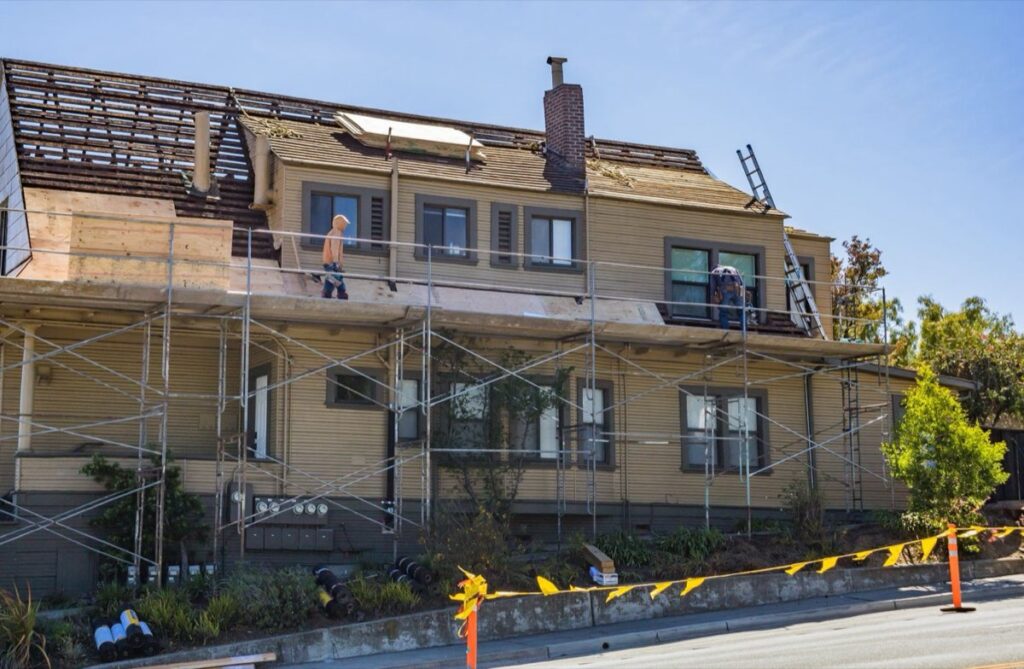
When the damage is widespread, patching over it is a disservice. Here is what a real remediation involves and what it costs.
Repair and full remediation, every time. You see both numbers.
Probe data sets the scope - not a salesman, not the finish.
Send your report; we tell you what it actually requires.
Widespread moisture behind a face-sealed EIFS wall does not dry out on its own, and it does not get better with sealant.
That is the flat truth this page exists to state. There is a point where a patch is not honest, and pretending otherwise just moves the cost down the road and adds mold to it.
Full remediation is warranted when the probe data shows the damage is no longer isolated. A few signs it has crossed that line:
The reason older EIFS reaches this state is baked into the system. It is a barrier design with no way to drain. Once several joints and flashings have been leaking for years, the water has spread behind a finish that still looks fine. We cover the mechanics in why EIFS fails.
We start with the moisture data, not a guess. The report tells us where to expect damage. Opening the wall confirms how far it went. You do not want a crew discovering the real number halfway through.
The finish coat, mesh, and foam board come off the affected walls. This is where the actual condition of the wood is finally visible. On coastal homes we usually find the worst of it at kickout locations and below windows, which lines up with what the probes predicted.
Wet plywood and OSB get cut out and replaced. If the rot reached studs or a sill plate, those get addressed too. Any mold present gets remediated at this stage, which is its own line item and its own cost.
New sheathing over the same bad flashing just fails again. Kickout flashing gets installed correctly, window and door terminations get flashed and sealed to shed water, and every penetration gets detailed. This step is what separates a remediation from an expensive repaint.
Modern water-managed EIFS puts a drainage plane behind the foam so any water that gets in has a path back out. Systems like Dryvit, Sto, Senergy, and Parex all offer drainable assemblies. Some owners choose to convert off EIFS entirely to a hardcoat or fiber cement cladding instead. We lay out that decision in EIFS versus hardcoat and fiber cement.
EIFS replacement generally runs 8 to 45 dollars per square foot depending on access, height, and detail complexity. Mold remediation adds roughly 10 to 25 dollars per square foot where it is present. Complex patch-in areas around trim and openings can hit 30 to 50 dollars per square foot.
For a full-home remediation on the Cape Fear coast, a realistic range is 25,000 to 75,000 dollars or more. That is a genuine five-figure number, and it is the number people are afraid of when they open the report. We would rather you see it early and clearly than have it creep up mid-job. The full breakdown is in our EIFS cost guide.
Even on a job that ends up as a full remediation, we quote the repair scenario too, so you can see why the tear-off is the right call and not just take our word for it. A mid-90s EIFS home near the Intracoastal came to us after a full re-clad quote. The readings backed it up, whole elevations wet, sheathing gone soft at the deck ledger. That one genuinely needed the tear-off. The difference is we could show why on the data, not just assert it.
Send your moisture report through the contact form and we will tell you honestly which side of the line your house is on.
Upload the inspection report or photos of the readings. We tell you what it actually requires - repair or full remediation - honestly, before your closing date does.